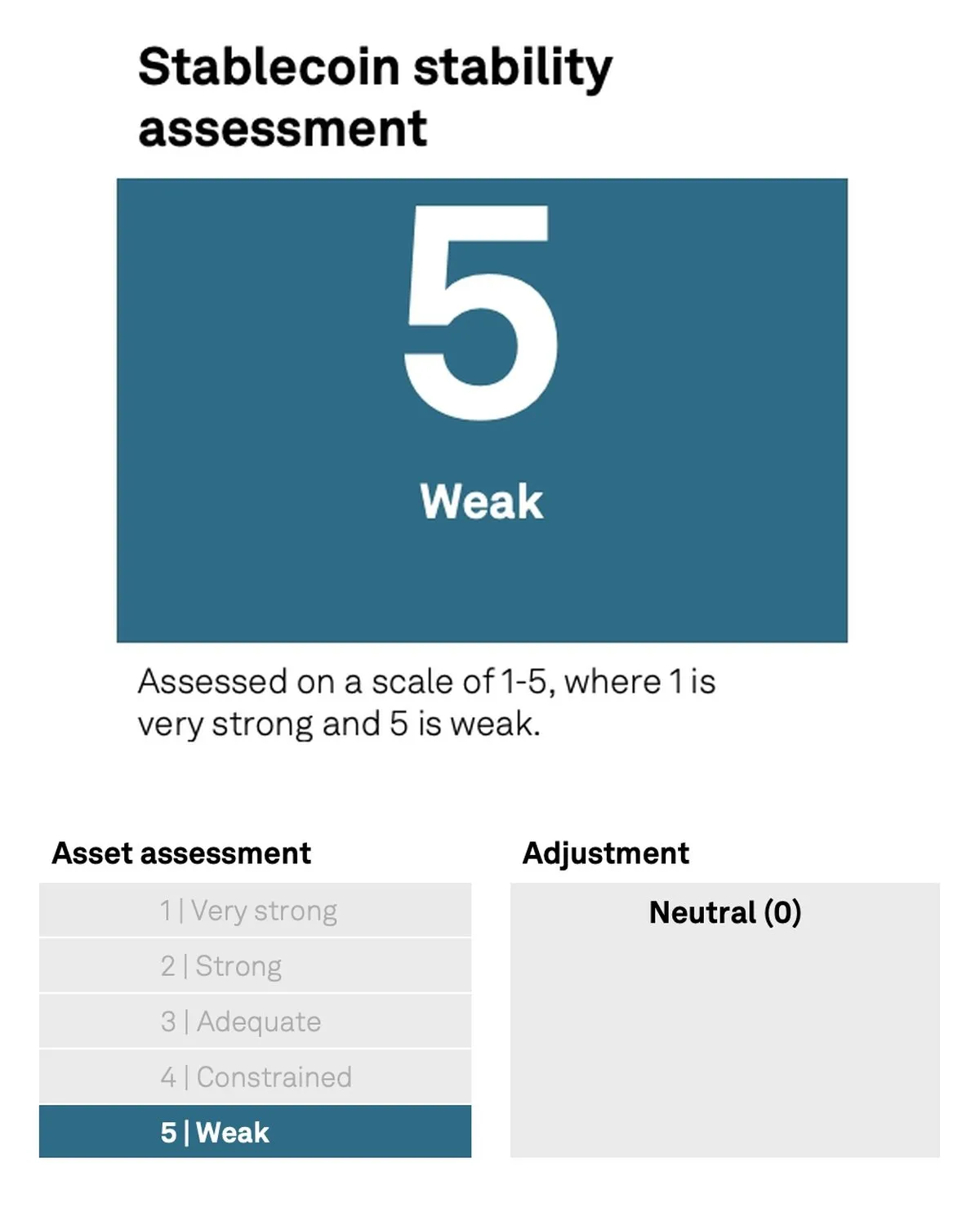
In a report dated November 18, rating agency S&P Global Ratings kept its assessment of the stablecoin USDT’s ability to maintain its $1 peg at 5 on a five-point scale. This is the lowest rating, “weak.” It was first downgraded to 5 in November 2025. S&P said it had identified new weaknesses, but the scale does not allow a rating below 5.
The main reason: the agency classifies gold, BTC, equities, secured loans and corporate bonds as risky assets. As of September 30, they accounted for 28% of USDT issued, up from 24% a year earlier. S&P estimates that a sharp decline in the value of these assets could leave USDT undercollateralized. The agency also criticizes transparency: audited financial statements and an auditor’s opinion have not been published; reserve reports do not name custodians or counterparties; and attestations are conducted quarterly, while other stablecoins are typically reviewed monthly. S&P also notes that in El Salvador, where Tether has been registered since January 2025, the regulator does not require reserves to be held separately, making it impossible to verify how well they are protected from risks associated with the company’s other businesses.
Tether disagreed with the assessment, saying the problem lies not with its reserves but with S&P’s methodology. The company referred to the film “The Big Short.” According to the report as of September 30, attested to by audit firm BDO, Tether’s assets totaled about $191.5 billion against liabilities of about $183.5 billion, leaving a surplus of about $7.95 billion. S&P nevertheless acknowledges that USDT has maintained its peg well, especially over the past 12 months.