
ZKsync co-founder Alex Gluchowski presented an updated strategy for developing the ecosystem and the economic model for the ZK token.
Initially, the team expected banks to use Ethereum as a single settlement layer, with fees for interactions between institutional L2s serving as a source of revenue for the ecosystem. However, financial institutions began choosing their own blockchains and private networks, so ZKsync had to change its approach.
Key changes:
- Expanding ZK’s role. Fees are expected to be collected for interactions between different blockchains through the new Prividium Connect product, rather than only between L2s on Ethereum.
- Purchasing ZK with fees. Revenue from cross-chain transactions can be converted into ZK through the Fee Flow System mechanism. The DAO will determine how the tokens are distributed going forward.
- Ending corporate licensing. The team removed software licensing from ZK’s economic model, as open source proved to be an important requirement for banks.
- Preparing the infrastructure. The code for the fee-switch mechanism has been published and is undergoing an audit, while the Fee Flow contracts have already been deployed on ZKsync Era.
The mechanism’s launch has not yet been approved. Once the audit is complete, integration with Prividium Connect and approval from ZKsync governance will be required.
Gluchowski also announced further expansion of the institutional product lineup, with details to be revealed by the team later.
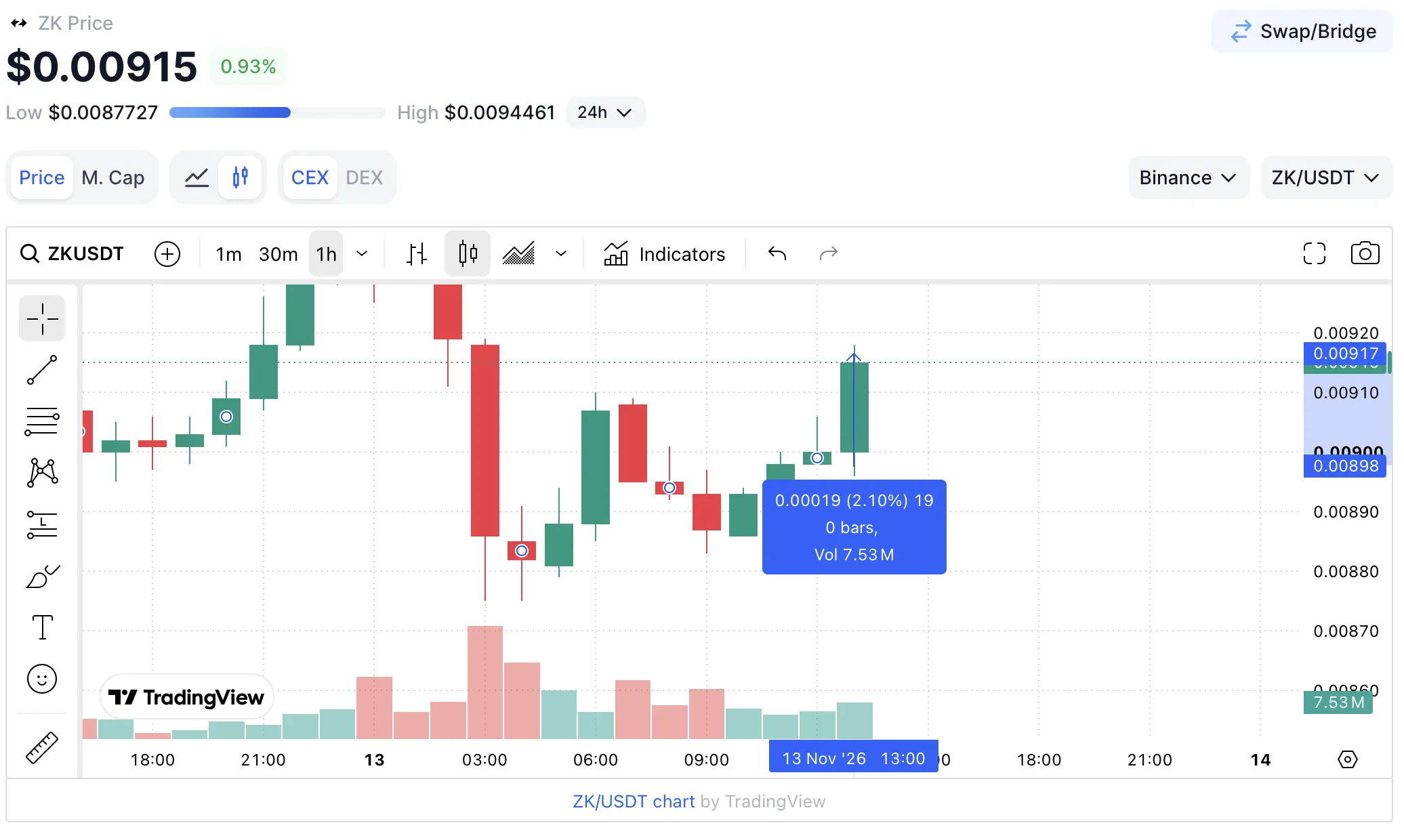
ZK +2%