
আফগানিস্তান, পাকিস্তান এবং মধ্য এশিয়ার কিছু অংশে সক্রিয় ইসলামিক স্টেটের সহযোগী ISIS-K-এর USDT ব্যালেন্স 131 TRON ঠিকানায় জমা হয়েছে OFAC নিষেধাজ্ঞার আপডেটের পরে, যা স্থিতিশীল কয়েনের জন্য একটি প্রয়োগ পরীক্ষা তৈরি করে। একবার পাবলিক-চেইন ইন্টেলিজেন্স, নিষেধাজ্ঞার তালিকা এবং ইস্যুয়ার নিয়ন্ত্রণ চালু হয়ে গেলে, Tether তার নিজস্ব টোকেন সিস্টেমের ভিতরে ব্যালেন্স জমা করতে পারে।
১ জুলাইয়ের পদক্ষেপটি ISIL খোরাসান নামকরণকে ডিজিটাল মুদ্রার পরিচালক দিয়ে আপডেট করেছে। Chainalysis বলেছে OFAC 134 ক্রিপ্টো ঠিকানা যোগ করেছে, যার মধ্যে 131 TRON ঠিকানা এবং তিনটি Monero ঠিকানা রয়েছে।
এটিও বলেছে Tether 131 TRON ঠিকানার উপর ব্যালেন্স জমা করেছে।
ফলাফল একটি নিষেধাজ্ঞার প্রবেশপথকে এমন একটি মানচিত্রে পরিণত করে যেখানে কেউ টাকার প্রবাহ বন্ধ করতে পারে। সরকারগুলি একটি লক্ষ্য চিহ্নিত করে; ব্লকচেইন ইন্টেলিজেন্স ওয়ালেটগুলিকে ম্যাপ করে; এক্সচেঞ্জ এবং কমপ্লায়েন্স ভেন্ডররা ঝুঁকি সনাক্ত করে; এবং একটি জমা করা ইস্যুয়ার তার টোকেন সিস্টেমের ভিতরে ব্যালেন্স বন্ধ করতে পারে।
Chainalysis বলেছে ISIS-K দ্বারা নিয়ন্ত্রিত 131 TRON ওয়ালেটগুলি 2023 সাল থেকে $1.4 মিলিয়নের বেশি পেয়েছে এবং $880,000 এর বেশি পাঠিয়েছে। এই অঙ্কগুলি দেখায় না যে ওয়ালেটগুলিতে কতটা বাকি ছিল যখন Tether তাদের জমা করেছিল, এবং এগুলিকে জমা করা ব্যালেন্স হিসাবে বিবেচনা করা উচিত নয়।
কিন্তু প্রবাহের মোট অঙ্কগুলি প্রয়োগ মডেলের কাজ দেখায়। ওয়ালেটগুলি তালিকায় প্রতীকী পরিচালক ছিল না। তারা একটি চেইনের অর্থায়নের পথের অংশ ছিল যা মূল সেবাগুলিকে স্পর্শ করেছিল এবং নামকরণের পরে স্ক্রীন করা যেতে পারে।
স্থিতিশীল কয়েনের নিষেধাজ্ঞার এখন একটি ইস্যুয়ার সুইচ রয়েছে
OFAC বছরের পর বছর ধরে ডিজিটাল মুদ্রার ঠিকানাকে নিষেধাজ্ঞার পরিচালক হিসাবে ব্যবহার করেছে, কিন্তু স্থিতিশীল কয়েনগুলি একটি নিয়ন্ত্রণ পয়েন্ট যোগ করে যা প্রতিটি ক্রিপ্টো সম্পদের ক্ষেত্রে একইভাবে নেই।
OFAC-এর ভার্চুয়াল মুদ্রার নির্দেশিকা বলে যে এটি SDN তালিকায় ডিজিটাল মুদ্রার ঠিকানা যোগ করতে পারে এবং যে পক্ষগুলি ব্লক করা ডিজিটাল মুদ্রা চিহ্নিত করে সেগুলি সম্পত্তি ব্লক করবে এবং সংশ্লিষ্ট তথ্য রিপোর্ট করবে।
একটি এক্সচেঞ্জ, কাস্টোডিয়ান, পেমেন্ট ফার্ম বা কমপ্লায়েন্স ভেন্ডরের জন্য, এর অর্থ হল তালিকাভুক্ত ঠিকানাগুলি এবং সংশ্লিষ্ট ঝুঁকি স্ক্রীন করা। একটি স্থিতিশীল কয়েন ইস্যুয়ারের জন্য, এটি চুক্তি বা ইস্যুয়ার-নিয়ন্ত্রণ স্তরে টোকেন ব্যালেন্স অক্ষম করাও হতে পারে।
Tether ইতিমধ্যে এই মনোভাবের দিকে এগিয়ে গেছে। ডিসেম্বর 2023-এ, কোম্পানিটি বলেছিল যে তারা OFAC-এর SDN তালিকায় থাকা ব্যক্তিদের সাথে সম্পর্কিত কার্যকলাপের জন্য স্বেচ্ছাসেবী ওয়ালেট জমা করার নীতি চালু করেছে।
[
Related Reading
Tether commits to freezing addresses linked to sanctions as scrutiny over USDT misuse grows
গত এক বছরে, Tether তার USDT স্থিতিশীল কয়েনের একটি উল্লেখযোগ্য পরিমাণ অবৈধ কার্যকলাপের সাথে জড়িত হওয়ার কারণে জমা করেছে।
Apr 23, 2024 · Oluwapelumi Adejumo
[
ISIS-K মামলাটি দেখায় যে সম্পদটি একটি পারদর্শী চেইনে বড় USDT ফুটপ্রিন্ট নিয়ে থাকলে সেই নীতি বাস্তবে কী অর্থ বহন করে।
ফলাফল হল একটি ভিন্ন ধরনের নিষেধাজ্ঞার পরিধি। প্রচলিত নিষেধাজ্ঞা প্রায়শই ব্যাংক, করেসপন্ডেন্ট অ্যাকাউন্ট, পেমেন্ট প্রসেসর এবং কাস্টোডিয়ানদের মাধ্যমে কাজ করে। এই মডেলে, স্থিতিশীল কয়েন ইস্যুয়ার সম্পদের কাছাকাছি বসে।
যদি একটি তালিকাভুক্ত ঠিকানায় জমা করা টোকেন থাকে, তাহলে প্রয়োগ পথ এক্সচেঞ্জগুলিকে কেবল জমা বা উত্তোলন প্রত্যাখ্যান করার উপর নির্ভর না করে ইস্যুয়ারের মাধ্যমে চলতে পারে।
এটি সিস্টেমকে স্বয়ংক্রিয় বা সম্পূর্ণ করে না। এটি এখনও সময়মতো ইন্টেলিজেন্স, সঠিক লেবেলিং, আইনি প্রক্রিয়া, পরিচালনার ক্ষমতা এবং ইস্যুয়ারের ইচ্ছা বা বাধ্যবাধকতার উপর নির্ভর করে।
এটি বেসরকারি কোম্পানিগুলির বিষয়ে কঠিন প্রশ্ন তৈরি করে যেগুলি বিশ্বজুড়ে ঘুরে বেড়ানো ডলার-সংযুক্ত টোকেনের জন্য চোখের বাঁধা হয়ে উঠছে। কিন্তু ISIS-K আপডেট দেখায় যে ইস্যুয়ারের ভূমিকা আর তত্ত্বগত নয়।
এটি হল স্থিতিশীল কয়েন ইস্যুয়ারদের এখন বহন করা নীতির টানাপোড়েন। একই নিয়ন্ত্রণ যা একটি ইস্যুয়ারকে নিষেধাজ্ঞার নামকরণের প্রতিক্রিয়া দেয় তা নিয়ন্ত্রক, আইন প্রয়োগকারী, এক্সচেঞ্জ এবং বিশ্লেষণ সংস্থাগুলির কাছ থেকে একটি স্থায়ী প্রত্যাশা হয়ে উঠতে পারে।
একবার এই প্রত্যাশা থাকলে, একটি ডলার টোকেন রিজার্ভ গুণমান, তরলতা এবং রিডেম্পশন অ্যাক্সেসের চেয়ে বেশি কিছু দ্বারা মূল্যায়ন করা হয়। এটি একটি তালিকাভুক্ত ওয়ালেট চেইনে দেখা দিলে ইস্যুয়ার কত দ্রুত কাজ করতে পারে তার উপরও মূল্যায়ন করা হয়।
TRON-ভিত্তিক USDT মামলার কেন্দ্রে রয়েছে
TRON ঠিকানার সংখ্যা হল বিশদ যা পদক্ষেপটিকে আকার দেয়। Chainalysis বলেছে ISIS-K আপডেটে 131 TRON ঠিকানা অন্তর্ভুক্ত ছিল, যা তিনটি Monero ঠিকানার সাথে তুলনা করা হয়েছে।
Tether-এর জমা করা প্রয়োগ হয়েছে TRON পক্ষে কারণ সেই ব্যালেন্সগুলি একটি টোকেন সিস্টেমে ছিল যা ইস্যুয়ার নিয়ন্ত্রণ করতে পারে।
এই বিশদটি এক্সচেঞ্জ এবং পেমেন্ট ফার্মগুলিকে প্রভাবিত করে কারণ TRON-ভিত্তিক USDT দ্রুত, সস্তা ডলার স্থানান্তরের একটি সাধারণ রেল হয়ে উঠেছে। যখন একটি নিষেধাজ্ঞার পদক্ষেপ TRON ঠিকানাকে নাম দেয়, কমপ্লায়েন্স বোঝা তালিকাভুক্ত ওয়ালেটগুলিতে থামে না।
ফার্মগুলি প্রশ্ন করতে হবে যে তারা কি সেই ঠিকানাগুলি থেকে অর্থ পেয়েছে, তাদের কাছে অর্থ পাঠিয়েছে, সংশ্লিষ্ট গোষ্ঠীর সাথে যোগাযোগ করেছে বা পাশের নগদ উত্তোলন পথের মাধ্যমে গ্রাহকদের সেবা দিয়েছে।
Related Reading
Justin Sun defends Tron following allegations of facilitating terror financing
Sun said the blockchain network is committed to fighting illegal use by terror groups but maintained that decentralization was its primary concern.
Nov 27, 2023 · Oluwapelumi Adejumo
[
Chainalysis বলেছে যে নামকরণ করা কয়েকটি ওয়ালেট সিরিয়া ভিত্তিক ক্রিপ্টো এক্সচেঞ্জে অর্থ পাঠিয়েছে এবং মূল সেবাগুলিতে ব্যাপক ঝুঁকি ছিল। এটিই স্থিতিশীল কয়েনের নিষেধাজ্ঞা কাগজপত্র নয় বরং অবকাঠামো হয়ে ওঠে।
তালিকাভুক্ত ঠিকানাটি হল শুরুর বিন্দু। আসল কাজ হল প্রতিপক্ষ, জমা, উত্তোলন, সেবার ঝুঁকি এবং যেকোনো সংযুক্ত ঠিকানাকে ম্যাপ করা যা এখনও পাবলিক নয়।
Tether-এর সাম্প্রতিক ইতিহাস এই প্রবণতাকে আরও শক্তিশালী করেছে। এপ্রিলে, কোম্পানিটি বলেছিল যে তারা OFAC এবং মার্কিন আইন প্রয়োগকারীদের সাথে সমন্বয় করে USDT-এ 344 মিলিয়ন ডলারের বেশি জমা করার সমর্থন করেছে।
মে মাসে, তারা বলেছিল যে T3 আর্থিক অপরাধ ইউনিট যাতে Tether, TRON এবং TRM Labs অন্তর্ভুক্ত ছিল 450 মিলিয়ন ডলারের বেশি জমা করেছে অবৈধ ক্রিপ্টো প্রবাহের সাথে সম্পর্কিত।
[

Related Reading
How Tether, TRON, TRM Labs froze $100 million in stolen digital assets
The unit collaborates with global authorities to combat financial crime using blockchain forensics across billions in volume.
Jan 2, 2025 · Liam 'Akiba' Wright
](https://cryptoslate.com/how-tether-tron-trm-labs-frozed-100-million-in-stolen-digital-assets/)
[
সেগুলি ISIS-K আপডেট থেকে আলাদা পদক্ষেপ, কিন্তু তারা একটি পুনরাবৃত্তিমূলক প্যাটার্ন দেখায়: বিশ্লেষণ ঝুঁকি সনাক্ত করে, পাবলিক বা বেসরকারি প্রয়োগ চ্যানেল ওয়ালেটগুলিকে চিহ্নিত করে, এবং ইস্যুয়ার জমা করা প্রতিক্রিয়ার অংশ হয়ে ওঠে।
নীতির পটভূমি একই দিকে এগোচ্ছে। এপ্রিলে একটি প্রস্তাবিত নিয়মে, FinCEN এবং OFAC অনুমোদিত পেমেন্ট স্থিতিশীল কয়েন ইস্যুয়ারদের জন্য AML/CFT এবং নিষেধাজ্ঞার অনুপালনের প্রয়োজনীয়তা নির্ধারণ করেছে, যার মধ্যে অনুমোদিত লেনদেন ব্লক, জমা এবং প্রত্যাখ্যান করার জন্য প্রযুক্তিগত ক্ষমতা রয়েছে।
নিয়ন্ত্রকরা ক্রমাগত স্থিতিশীল কয়েন ইস্যুয়ারদের কমপ্লায়েন্স দায়িত্বসহ আর্থিক অবকাঠামো হিসাবে বিবেচনা করছে, শুধুমাত্র সফটওয়্যার-সংলগ্ন টোকেন কোম্পানিগুলি নয়।
](https://cryptoslate.com/how-tether-tron-trm-labs-frozed-100-million-in-stolen-digital-assets/)
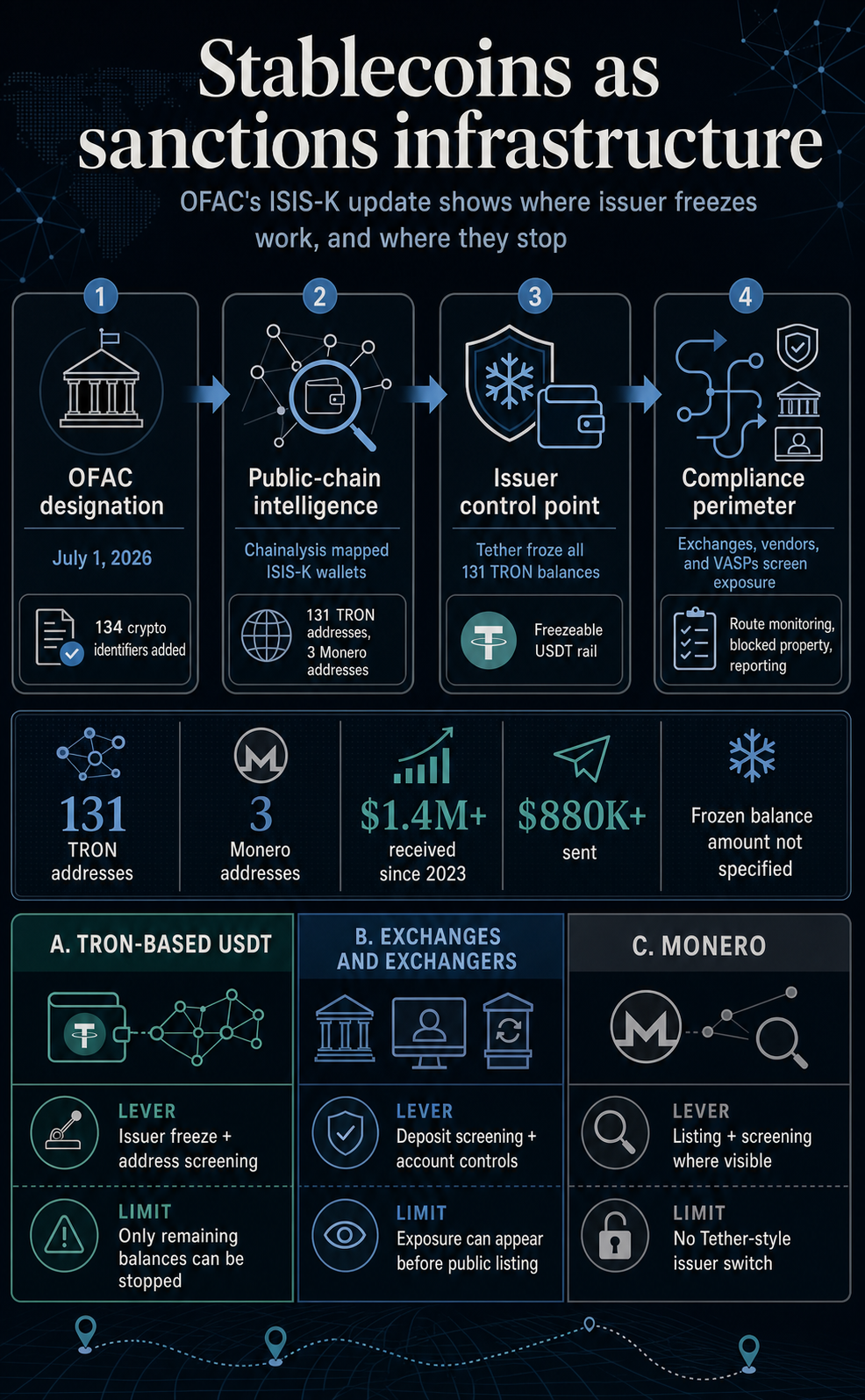
| Rail | Enforcement lever | Limit |
|---|---|---|
| TRON-based USDT | Issuer freeze, address screening, exchange monitoring | Only remaining token balances can be frozen; prior flows still require tracing |
| Centralized exchanges and exchangers | Account controls, deposit screening, withdrawal blocks, reporting | Exposure may appear before a public designation or through intermediaries |
| Monero and other non-issuer assets | Sanctions listing, screening, investigative tracing where possible | No Tether-style issuer control point for freezing balances |
The Monero addresses show where the model stops
The same OFAC update also included three Monero addresses. That contrast is important because it shows the limit of issuer-driven enforcement.
Monero accounts are controlled through private keys, not by a centralized issuer that can disable a token balance. OFAC can list an XMR address, and exchanges or other covered firms can screen for exposure where they have visibility.
Investigators can still pursue leads, counterparties, devices, service providers, and user errors. But there is no equivalent of asking Tether to freeze a USDT balance at the issuer layer.
That split is likely to shape behavior. If stablecoin freezes become faster and more routine, sanctioned actors and illicit networks have incentives to shift funds toward assets or routes with fewer issuer controls.
That does not make those routes safe or invisible. It does make them harder to interrupt at a single corporate control point.
For governments, the appeal of freezeable stablecoins is obvious. Public chains leave trails. Stablecoins often touch centralized services. Issuers can act like payment processors or banks when legal and operational conditions are met.
The result is a sanctions tool that can move faster than traditional cross-border finance in some cases.
For crypto users and infrastructure providers, the tradeoff is just as clear. The same feature that lets an issuer stop funds tied to a sanctioned terrorist group also confirms that tokenized dollars carry centralized control.
That may be acceptable, even expected, for regulated payment stablecoins. It also marks a dividing line between assets designed to behave like compliant money-market infrastructure and assets designed to minimize third-party control.
That dividing line gives the ISIS-K action its forward-looking edge. The enforcement gain is strongest when illicit finance uses tokenized dollars on public chains.
The incentive to adapt is strongest when those actors can move into assets or venues where the issuer switch is absent, visibility is weaker, or cash-out points sit outside cooperative channels.
The next fight is over the route, not the wallet
The ISIS-K update points to the next phase of crypto sanctions: enforcement will focus less on a single wallet and more on the route around it.
A listed address can be frozen if it holds issuer-controlled stablecoins. It can be screened by exchanges and custodians. Its counterparties can be mapped by analytics firms.
But the funding network can still adapt by moving through new addresses, unlisted intermediaries, offshore exchangers, privacy tools, or assets without issuer controls.
The OFAC and Chainalysis record goes beyond Tether freezing 131 wallets. Stablecoin rails are becoming part of a standing enforcement stack.
The stack includes sanctions lists, blockchain intelligence, issuer controls, exchange compliance, and vendor tooling. Each part covers a different piece of the route.
The ISIS-K case also shows the model’s built-in limitation. Freezeable stablecoins are powerful when illicit finance uses tokenized dollars on transparent chains.
They are less decisive when funds have already moved, when balances are gone, when counterparties sit outside cooperative venues, or when activity shifts to assets without a centralized issuer.
For stablecoin issuers, the message is that scale now comes with enforcement expectations. For exchanges, the pressure is to detect exposure before a listed wallet arrives at the deposit page.
For compliance vendors, the value is in turning public designations into real-time routing maps. For users, the case is a reminder that the most liquid on-chain dollars are not neutral pipes. They are programmable balances inside systems that can be stopped.
The next signal will be whether actions like this remain case-by-case responses or become a normal operating layer for dollar stablecoins.
If issuer freezes, exchange screening, and chain analytics continue to converge, stablecoins will do more than just move dollars on public chains. They will help decide which on-chain dollars can keep moving.
The post Tether freezes 134 ISIS terror wallets as stablecoins now sit inside the sanctions machine appeared first on CryptoSlate.