
- Plural has raised €1 billion, nearly four times its 2022 first fund.
- Plural invested in Helsing, Proxima Fusion, and OLIX before those companies became well known.
- About two-thirds of the fund will go into new early-stage investments; the remainder will support the top companies in the portfolio.
When Plural started in 2022, it was very difficult for European founders working in fusion, defence and space to get any support at all. Four years on, they now have €1 billion to go out and find the next generation of these ventures.
The firm, with offices in London, Tallinn and Paris, announced the new fund — nearly four times the size of its first fund, which closed at €260 million in 2022, and almost double the size of its €500 million second fund raised in 2024. Tech Funding News had previously reported that Plural was targeting €1 billion.
The capital is split roughly 2:1 between Fund III, focused on new early-stage, and a separate vehicle to increase investment in existing category leaders. Each partner will be actively involved in several new deals per year.
From too risky to highly sought-after
Khaled Helioui, Plural partner and former CEO of Bigpoint, says the market’s attitude has changed: “Something significant has shifted among Europe’s startups. When we started Plural, someone building a fusion reactor or a space exploration company from Europe was treated as too risky to back. Now they’re among the most sought-after founders in the world. ”
“That’s a generational shift in ambition and self-belief. We’re convinced these frontier founders are capable of building Europe’s first trillion-dollar company, and we want to be backing them from day one,” he adds.
Plural says its portfolio companies have raised over €3 billion in follow-on funding over the last year. In 2026 alone, over 100 European companies raised $100 million or more, and 10% of Plural’s portfolio is in that group.
In July, Helsing raised $1.8 billion at an $18 billion valuation, and Proxima Fusion secured €411 million at a €2.4 billion valuation. In the UK, OLIX landed $312M at a $3.3B valuation, which is more than triple its February valuation, and Callosum closed a $100 million seed round led by Atomico.
Plural points to technical milestones in the form of Hypersonica completing Europe’s first privately funded hypersonic test flight just nine months after design was complete. Robeauté was the first to use a microrobot in an animal brain. Monumental’s bricklaying robots built 0.5% of the new homes in the Netherlands this year.
The portfolio also includes Frankenburg Technologies in defence, The Exploration Company in space, Ore Energy and Rivan in energy and Teton and Everlab in health.
Backing founders from the Outset
Carina Namih, Plural partner and co-founder of HelixNano, thinks Europe is far too risk-averse when it comes to funding.
“For too long, Europe has funded its best ideas in small increments. Founders raise a little, prove a little, and then have to raise again. That’s not how you build anything hard. Our new fund will back founders properly from the start, so their ambition can be as big as the problems they’re taking on,” she said.
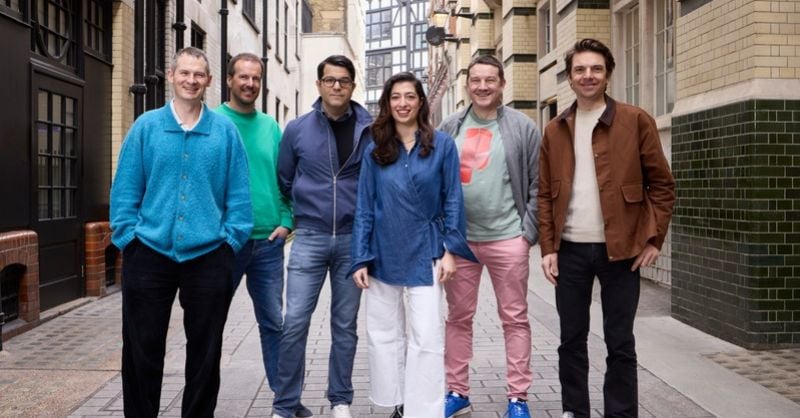
Currently, Plural has six equal partners who have built or run companies: Taavet Hinrikus (Wise, Skype), Sten Tamkivi (Teleport), Ian Hogarth (Songkick, UK AI Security Institute), Helioui, Namih and Pierre-Dimitri Gore-Coty, the former Uber executive who joined full-time in October 2025.
Its backers include university endowments, foundations, fund of funds, insurers, pension plans and family offices. Endowments and foundations are the largest group, and the partners are among the largest investors.
According to Plural, Europe has always had strong founders but not enough money. The question now is whether that €1B will go toward ensuring the next Helsing is built in Europe.